Many conveyor drive failures come from a mismatch between the gearbox and the load, space constraints, or environmental conditions. The problems below commonly come up in OEM conveyor system designs.
Summary
| Conveyor Design Challenge | Root Cause | Recommended Gearbox Solutions | Mas Continuous Torque / Load Spec |
|---|---|---|---|
| Tight Frame / Aisle Protrusion | Inline layouts & external couplings | GearSync Helical Bevel (GB/GHB) or Helical Parallel (GP/GHP) | up to 3,500 Nm (S1 continuous duty) |
| Coupling & Alignment Labor | Multi-part shaft interfaces | Hollow-shaft mounting, clamping coupling system | Fits NEMA, IEC, AC & servo motors |
| Heavy Radial Loads | Exceeds standard output bearings | PUL Heavy-Duty Planetary (tapered roller bearings) | Up to 27,800 N radial load |
| Servo Indexing Side-Pull | High Overhung Loads (OHL) + accel torque | PHCH Planetary Servo Gearhead | Up to 11,380 N OHL (70-155 mm frames) |
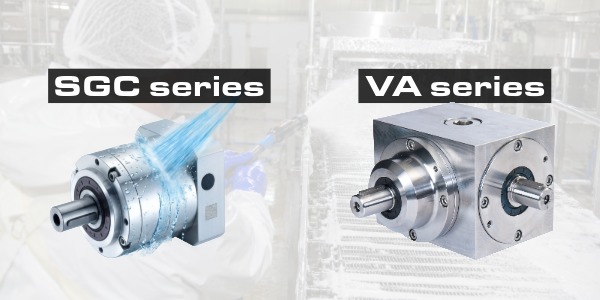
| Caustic Washdown Corrosion | Chemical spray degrading painted housings | SGC/SGE Planetary or Tandler VA Series | 316 Stainless Steel, IP65/IP67 |
Problem 1: How do you fit a conveyor drive into a tight machine footprint?
Symptom: The motor and gearbox stick out into the aisle, or the drive train is too long for the available space.
Cause: Inline drive layouts and external couplings add length and protrusion.
Solution: Right-angle and parallel-shaft gearboxes. The GearSync Helical Bevel and Helical Parallel series allow the motor to sit flush along the conveyor frame.
Both come in light aluminum housings or heavy-duty cast iron housings, so you can size to the load without changing the orientation.
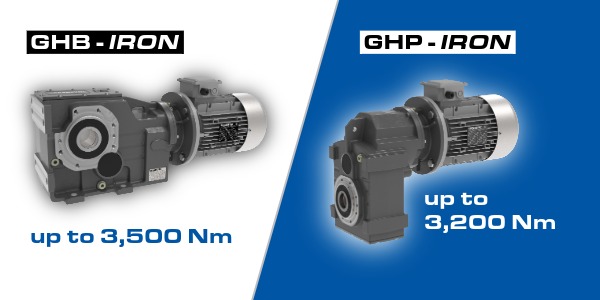
| Series | Orientation | Frame Sizes | Nominal Torque | Overhung Load | Ratios |
|---|---|---|---|---|---|
| Aluminum (GB) | Right-angle Bevel | 402, 502, 633, 903 | up to 500 Nm | 3,500 to 9,500 N | ~6.2:1 to ~222:1 |
| IRON (GHB) | Right-angle Bevel | 423, 433, 443 | 950 to 3,500 Nm | 18,500 to 31,000 N | ~7.3:1 to ~179:1 |
| Aluminum (GP) | Offset Parallel | 902/3, 912/3 | up to 600 Nm | 6,000 to 10,000 N | ~5.7:1 to ~376:1 |
| IRON (GHP) | Offset Parallel | 922/3, 932/3, 942/3 | 1,100 to 3,200 Nm | 9,500 to 31,000 N | ~5.7:1 to ~405:1 |
Torque figures are maximum continuous (nominal) output torque, M2max, for standard continuous duty (S1 service). Both lines are available in 2-stage and 3-stage versions. For lightweight unit-handling conveyors, DSW worm reducers give a compact 90º drive.
Problem 2: Coupling cost, alignment labor, and shaft damage
Symptom: Time lost aligning external couplings, extra length in the drive train, and fretting or binding at the motor shaft.
Cause: Separate couplings between the gearbox and drive roll shaft add parts and alignment steps, and motor shaft interfaces vary across NEMA, IEC, and servo motors.
Solution: Direct shaft mounting. GearSync’s helical bevel and helical parallel reducers have hollow output shafts (keyway or shrink disc) that slip directly onto the drive roll shaft, which eliminates the external coupling.
On the motor side, GearSync’s unique clamping coupling system accepts standard NEMA, IEC, or AC motors without fretting or binding the shaft through our dual-steel half-coupling design which ensures the motor always slides off easily.
These series also take servo motor inputs, and they integrate directly with standard AC induction motors (typically 900 to 1,800 rpm base speeds) or VFD-driven setups.

Problem 3: How to handle high radial loads and bending moments on heavy pallet conveyors
Symptom: Standard servo gearheads can’t carry the load of a heavy pallet conveyor or high-force belt drive.
Cause: Radial loads and bending moments exceed what a standard output bearing arrangement can absorb.
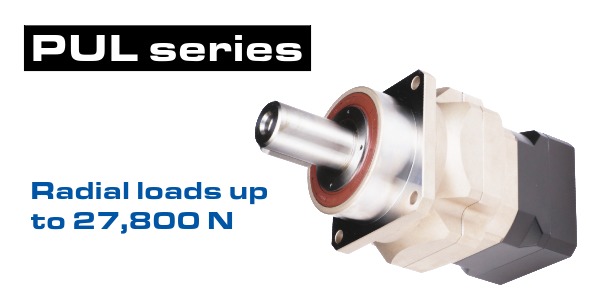
Solution: A gearhead designed for high radial loads. The PUL series heavy-duty planetary gearheads use oversized tapered roller bearings rated for radial loads up to 27,800 N and heavy bending.
Problem 4: Side-pull forces on servo-driven conveyors
Symptom: Premature bearing wear or shaft deflection on timing-belt and drive-roller conveyors running rapid start/stop indexing, sorting, or packaging cycles.
Cause: Belt sprockets and drive rollers load the output shaft radially. This overhung load (OHL) comes on top of the torque the gearhead must deliver during high acceleration moves.
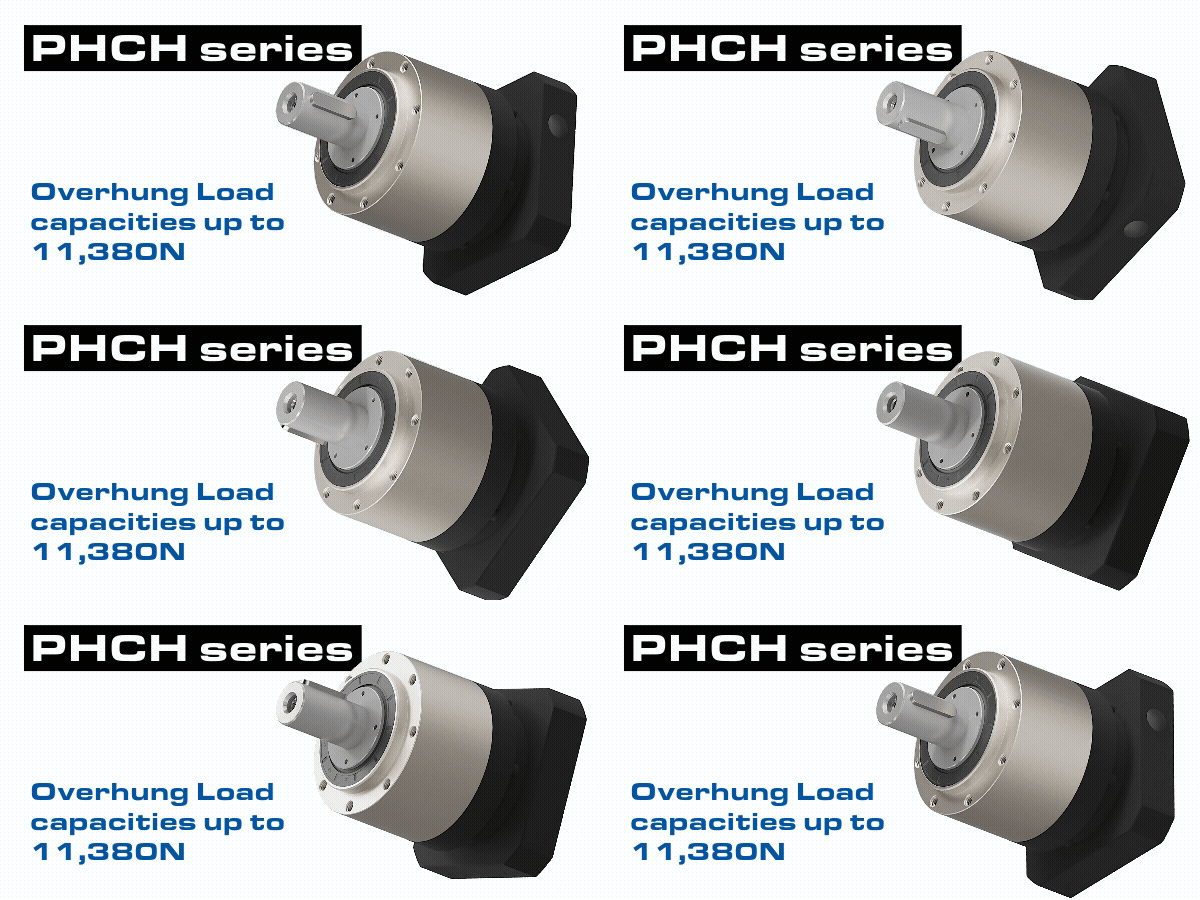
Solution: A gearhead rated for the radial load AND for high torque. The PHCH series planetary servo gearheads combine high acceleration torque with overhung load capacities up to 11,380 N, which keeps radial forces from deflecting the motor shaft or damaging internal bearings. PHCH uses standardized metric mounting dimensions across 70 mm to 155 mm sizes, so they can drop into existing machine designs without re-engineering mounting plates.
Problem 5: Corrosion in washdown environments
Symptom: Housings rust or seals fail on food, beverage, and processing lines.
Cause: Caustic chemical washdowns and high-pressure spray attack standard painted/coated housings.
Solution: A corrosion-resistant, stainless steel gearhead. The SGC/SGE planetary series and Tandler VA series use 316 stainless steel housings and are rated up to IP65/IP67.
Engineer’s Quick-Sizing Checklist for Conveyor Drives
2. Evaluate Radial and Overhung Loads (OHL): Measure all side-pull forces generated by belt sprockets, chain drives, or drive rollers. Ensure your selected gearhead uses reinforced bearings (such as tapered rollers on the PUL series or PHCH series) to absorb heavy radial loads without shaft deflection.
3. Verify Envelope Constraints: Map out your physical frame limitations. Choose right-angle bevel (GearSync GB/GHB) or parallel-shaft (GearSync GP/GHP) layouts to eliminate aisle protrusion, or select direct hollow-shaft mounting to remove external couplings.
4. Confirm Environmental Protection: Match the housing material and sealing to your operating environment. Specify cast iron for heavy industrial framing, or 316 stainless steel (such as the SGC/SGE planetary or Tandler VA series) for caustic chemical washdown lines.
If you’re working through a conveyor drive selection and want help from a team engineers with OEM design experience, contact DieQua today.