Gearbox seal leaks are the bane of industrial operations. Because proper lubrication is the lifeblood of enclosed drives, maintaining oil levels is critical to achieving a long service life. When oil starts leaking, immediate corrective action is necessary—but finding the root cause isn’t always straightforward.
The causes of a leaking seal can vary widely based on the gear type, mounting orientation, operating speed, and surrounding environment. Below is a real-world troubleshooting case study and a breakdown of the primary factors to investigate.
Note: Videos are AI-generated for visual illustration and may not represent real-world examples.
Investigating a Gearbox Leak: A Real-World Case Study
A maintenance team using a competitor’s worm gear speed reducer reached out to our engineering team with a recurring issue. Their unit was mounted with the output shaft horizontal and the quill-mounted motor pointing vertically downward. The input shaft seal was leaking continuously, flooding the motor cavity.
Initial Diagnostic & Operating Conditions
To pinpoint the leak’s origin, we evaluated the application parameters:
-
Operating Profile: 10:1 ratio driven by a standard AC motor running on a VFD, overdriven up to 2,500 RPM.
-
Environment: Standard ambient indoor factory temperatures with no aggressive chemical exposure.
-
Thermal Inspection: The housing was significantly hotter near the motor flange than elsewhere on the body.
While seal friction naturally generates local heat, high shaft speeds combined with oil pooling at the lower cavity boundary increased internal thermal expansion. Increased temperature raises internal casing pressure, forcing oil past the seal lip. However, because the fluid type and fill volume were verified correct, heat alone was not the sole culprit.
The Solution
To permanently stop the leak, our team recommended a two-part fix:
- Upgraded Seal Material & Style: Upgraded to a double-lip Viton (FKM) seal to better withstand elevated local temperatures and maintain a tight barrier against fluid head pressure.
- Corrected Venting: Moved the breather vent to the highest available port on top of the housing. This equalizes internal casing pressure and prevents oil from being forced past the lower seal.
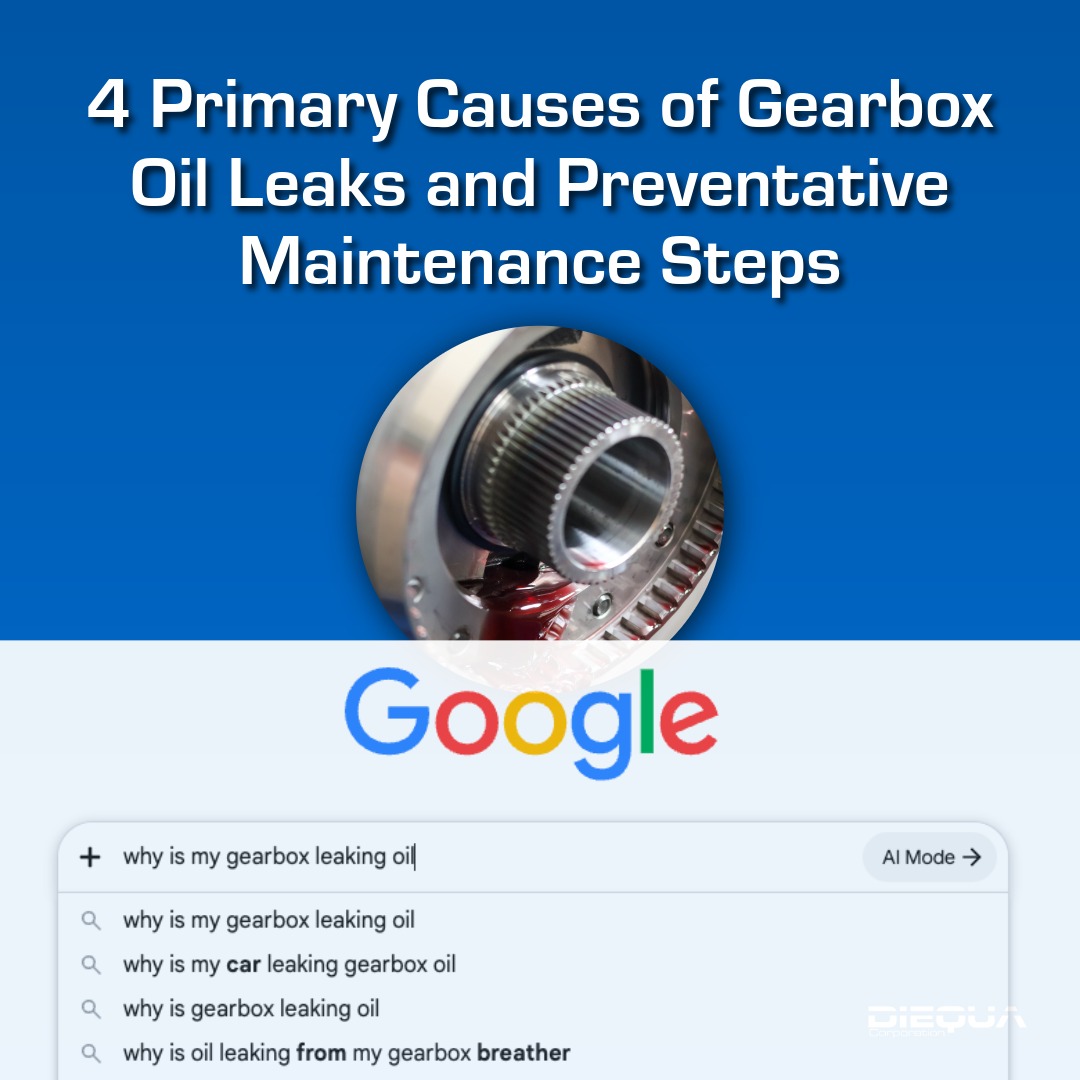
4 Primary Causes of Gearbox Oil Leaks
1. Improper Venting & Internal Pressure Build-Up
Inefficient or high-speed gearboxes—especially worm gear speed reducers—internal air expands as heat builds up. Without proper pressure relief, the path of least resistance for expanded air and fluid is past the seal lips.
-
Preventative Maintenance Step: Verify that a breather vent is installed and free of debris. Ensure the vent plug is placed at the highest allowable port for your mounting position.
2. Corrosive, Abrasive, or Environmental Contamination
External contaminants like grit, metal dust, washdown chemicals, or processing fibers can accumulate at the contact point between the seal lip and the rotating shaft.
-
Preventative Maintenance Step: Install auxiliary barriers—such as external V-rings, non-contacting labyrinth seals, or grease-packed double-lip seals—alongside mechanical slingers or protective shaft sleeves to shield and preserve the primary seal interface.
Additionally, avoid directing high-pressure spray directly at seal lips, mask off shafts during paint touch-ups, and equip housing breathers with particulate filters to prevent ambient dust from being drawn inside during thermal cycling.
3. Bearing Wear and Shaft Deflection
A leaking seal is frequently a secondary symptom of internal bearing failure. When bearings wear due to torque overloads, excessive overhung loads, or shaft misalignment, they lose their ability to hold shafts precisely in position, resulting in shaft runout and seal gap formation.
-
Preventative Maintenance Step: Regularly inspect bearings for excessive radial/axial play and verify motor-to-reducer shaft alignment using dial indicators. Correct any misalignment immediately by re-shimming the motor flange to prevent side-load forces from causing shaft runout and seal gap formation.
4. Improper Painting and Surface Preparation
Applying touch-up paint or field coatings without protecting precision components damages the sealing lip. Paint overspray on exposed shafts creates an abrasive texture that quickly grinds down the elastomeric seal lip during rotation. Uneven paint buildup also creates micro-gaps along the shaft surface, allowing oil to escape.
-
Preventative Maintenance Step: Inspect the shaft and seal lip for dried paint or flaking overspray before startup. Always practice proper shaft seal protection when painting by taping off shafts, seal lips, output flanges, and breathers.
Prevent Gearbox Seal Leaks Before They Start
While diagnosing seal leaks requires a systematic elimination process, most leak pathways can be engineered out during the initial design phase.
Reviewing shaft loading, mounting orientations, thermal limits, and pre-installation masking routines prior to deployment ensures long-term reliability. Partnering early with power transmission specialists prevents costly downtime and keeps your drives running cleanly.
Need assistance troubleshooting a leak or selecting a drive for a new application? Contact our engineering team to review your installation requirements.