When designing a machine that needs to turn motion 90 degrees, engineers usually look at standard planetary gearheads or traditional worm reducers. Standard worm gears are great for high reduction ratios in tight spaces, but they come with two well-known headaches: backlash and friction.
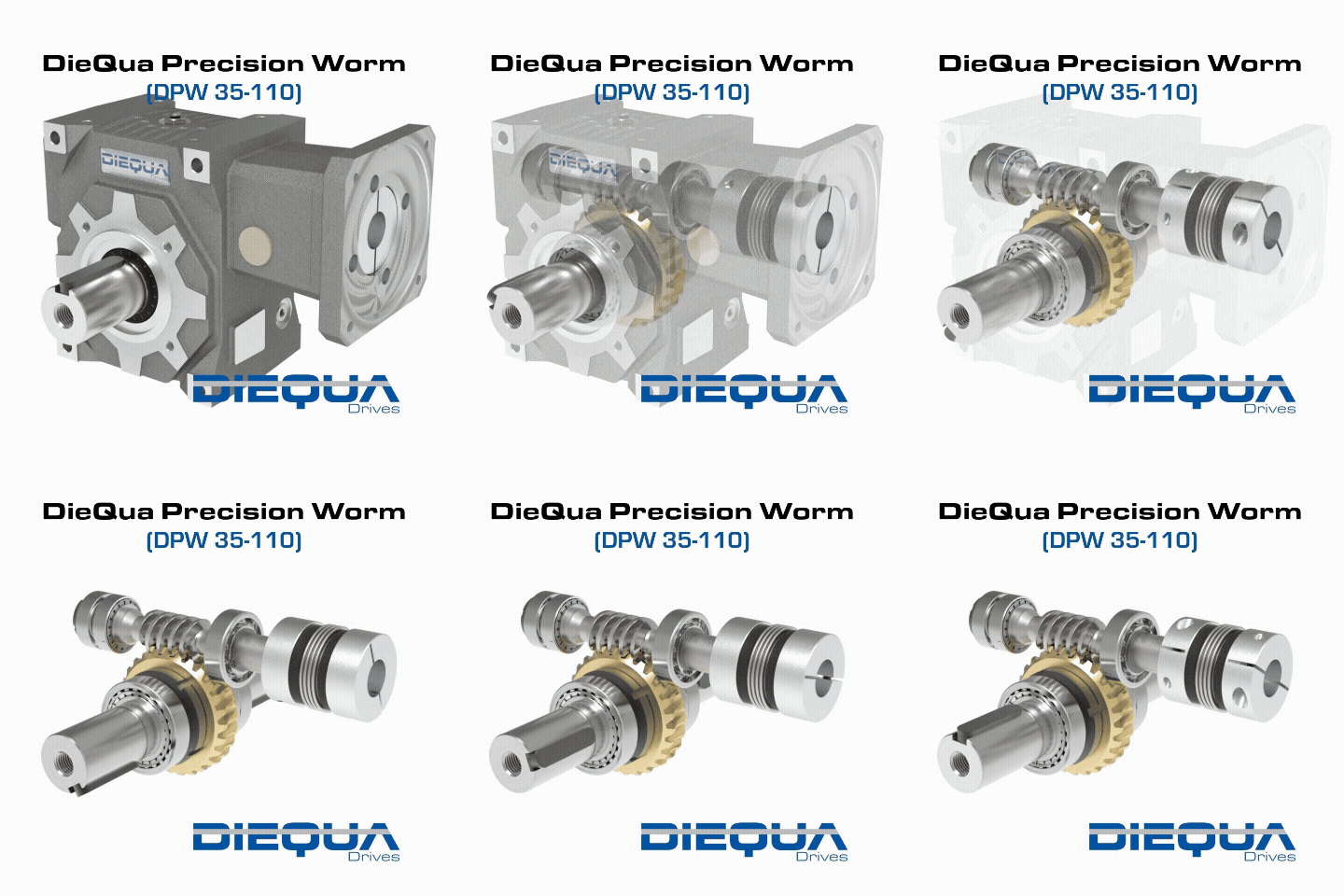
The DieQua Precision Worm (DPW) series takes a different approach. By using dual-pitch gear teeth and advanced metallurgy, it minimizes backlash without ruining tooth alignment or cutting into gear life.
1. How Dual-Pitch Teeth Control Backlash
In a standard worm gear, the teeth rub against each other and wear down over time, creating slop (backlash). If you move the gear shafts closer together to tighten up that slop, you push the gears out of alignment. That misaligns the tooth contact, accelerates wear, and leads to early failure.
The DPW series solves this by changing the shape of the worm threads rather than moving the shafts.
-
Dual-Pitch Design: The gap between teeth on the right side of the thread is slightly different from the gap on the left side.
-
Simple Adjustment: During assembly, shifting the worm shaft slightly along its axis tightens up the play. You get ultra-low backlash (less than 1 arcminute) without moving the gears closer together or misaligning the gear teeth.
-
Consistent Tooth Contact: Because the distance between the shaft centers stays fixed, the teeth mesh perfectly at their design point. Load stays evenly spread across the gear teeth, keeping wear low.
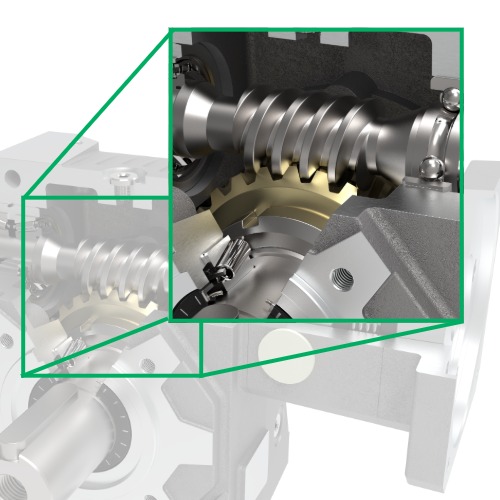
2. Smart Material Choices to Cut Friction and Heat
Because worm gear teeth slide against one another rather than roll, friction and heat are the main limits on performance. To keep efficiency high and extend gear life, the DPW pairs two materials chosen specifically for sliding contact:
-
Hardened and Ground Steel Worm: The steel worm shaft is hardened and polished smooth to eliminate microscopic rough spots.
-
Special Bronze Ring Gear: The mating gear is cast from a specialized bronze alloy formulated to slip easily against hardened steel under heavy continuous loads.
-
Synthetic Oil: Full synthetic lubricant keeps a protective oil film between the teeth, protecting against wear under heavy load.
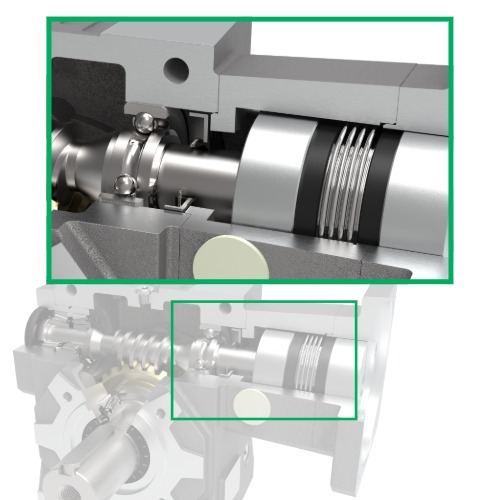
3. Built for Heavy Loads and Rigid Positioning
Accurate positioning requires a drive system that won’t twist or flex under load. The DPW housing and internal bearings are arranged to handle heavy radial and axial forces:
-
Rigid Housings: Smaller units (sizes 35 – 110) use lightweight diecast aluminum-magnesium to shed heat, while larger units (sizes 125 – 200) use heavy cast iron for maximum frame rigidity.
-
Heavy-Duty Bearings: Oversized taper roller bearings on the output shaft support high pulling and pushing forces without shifting the gears inside.
-
Rapid Servo Mounting Systems: A torsionally rigid metal-bellows coupling and servo mounting flange connects the servomotor tailored to your mounting dimensions.
| Specification | What it Means for Your Design |
|---|---|
| Backlash Rating | Less than 1 arcminute (adjustable via dual-pitch thread) |
| Size Options | 10 sizes available (DPW 35 through DPW 200) |
| Max Output Torque | Handles up to 7,800 Nm |
| Gear Ratios | 10 ratios; 5:1 to 90:1 |
| Housing Construction | Aluminum-Magnesium Alloy (DPW 35 – 110) or Cast Iron (DPW 125-200) |
When to Use a Precision Worm Gearhead
If you are deciding between a right-angle planetary drive and a precision worm gearhead, keep these two design factors in mind:
-
Tight Work Envelopes: Worm gearheads deliver high gear reductions in a much shorter, more compact package than multi-stage planetary drives.
-
Long-Term Accuracy: Dual-pitch adjustment allows you to keep positioning precise over time without messing up gear meshing geometry.
For detailed dimensions, check out the complete specs on the High Performance Servo Worm Page.