Production downtime is costly enough. Spending time procuring and installing another gearbox, only to have the machine fail again days or weeks later, is a major setback.
When a replacement unit stops working prematurely, the initial assumption is typically a manufacturing defect. However, empirical data from 40 years of field service investigations show that the gearbox itself is rarely the root cause. Instead, premature failure is almost always driven by installation oversights or unaddressed collateral damage in the broader mechanical drive system.
To prevent repeat downtime, here are the three most likely reasons a replacement gearbox fails prematurely—and how to prevent them.
1. Parallel and Angular Misalignment
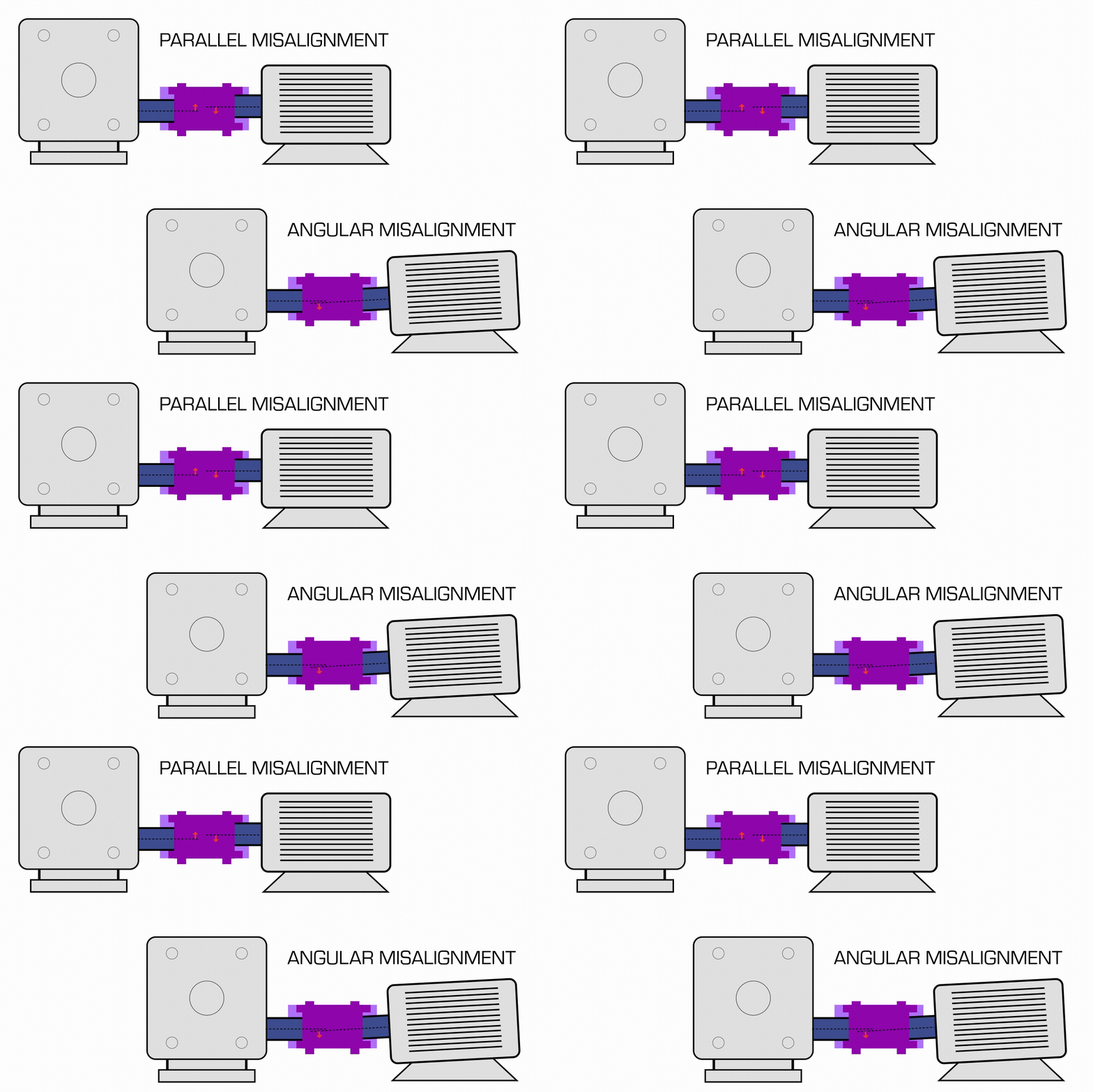
Misalignment is the leading cause of premature bearing wear and shaft fatigue in industrial drives.
Because gearbox mounting surfaces and machine frames are precision-machined, installers often assume they can simply bolt the new unit down and resume operation. However, machining tolerances stack up. A variance of just ±0.003 in. across mating components can exceed the misalignment capacity of some couplings.
- The Impact: When rigid couplings are used, or when shaft-mounted units are hard-flanged directly to the machine frame, there is virtually zero leeway. Any residual angular or parallel misalignment places continuous, unintended side-loads on the internal bearings, leading to rapid wear and, in extreme cases, shaft fatigue and fracture at the radius.
- Engineering Best Practice: Treat every replacement as a fresh installation. Do not rely solely on pre-machined mounting holes. Always use laser alignment tools to verify that the gearbox, coupling, and driven shaft are precisely aligned within manufacturer-specified tolerances before startup.
2. Excessive Radial Load via Improper Belt or Chain Tension
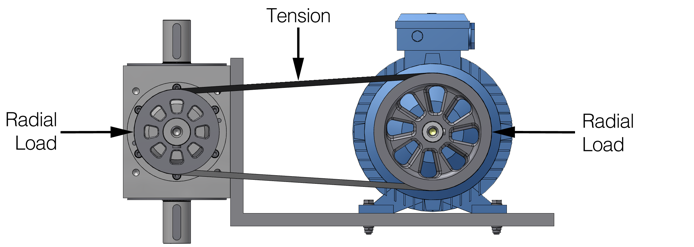
While torque transmission creates a predictable baseline radial load, the tension applied to external belts and chains frequently pushes the system past its design limits.
Belts and chains require proper tension to function, but “tighter is better” is a dangerous engineering myth—especially with modern high-strength timing belt materials that resist stretching.
- The Impact: Excessive tension, particularly across a 180-degree wrap angle, dramatically increases the radial force exerted on the output shaft. In many failure cases, the radial load caused by over-tensioning often exceeds the load generated by torque transmission, rapidly destroying output bearings.
- Engineering Best Practice: Follow the belt or chain manufacturer’s tensioning guidelines during reassembly. If a timing belt is jumping teeth or a V-belt is slipping, do not use extra tension as a stopgap; investigate the root mechanical cause of the slip.
3. Overlooked Damage in Supporting Drive Components
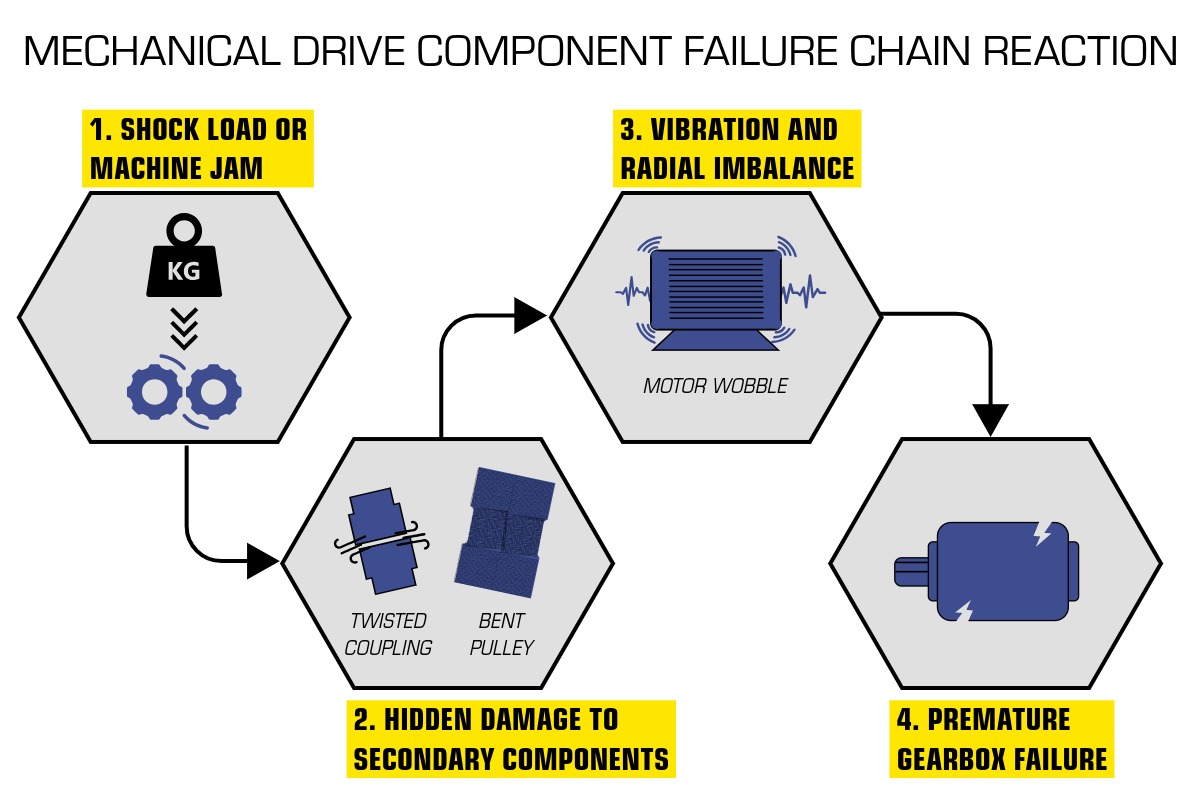
When a machine experiences a severe jam or sudden shock load, the primary symptom is often severe—such as a cracked key, broken gear teeth, or damaged bearings.
When rushing to get production back online, it is tempting to swap in a new gearbox without thoroughly inspecting the rest of the driveline.
- The Impact: Secondary components frequently sustain hidden damage during a major crash. A bent pulley introduces severe radial load imbalances; a twisted or unbalanced coupling generates destructive vibration frequencies; and a deformed mounting flange or base plate creates permanent angular misalignment.
- Engineering Best Practice: Treat supporting drive components as consumables after a major shock load. Inspect (and possibly replace) pulleys, sprockets, couplings, and mounting hardware alongside the gearbox to ensure a reliable restart.
Checklist Recap for Engineers:
Before commissioning a replacement gearbox, run through this quick installation checklist:
Verify Alignment
Measure parallel and angular alignment using precision tools rather than assuming frame tolerances.
Calibrate Tension
Set belt and chain tension strictly to manufacturer specifications; avoid over-tightening.
Inspect Driveline Hardware
Replace connecting components (couplings, pulleys, keys) that may have absorbed hidden shock damage during the previous failure.
Spending a little time on these checks can save you from a long downtime later. If you run into an issue with your gearbox, contact DieQua’s engineering team for help.