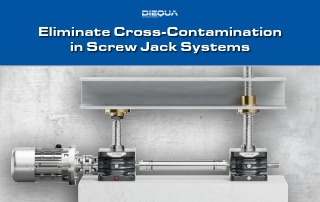

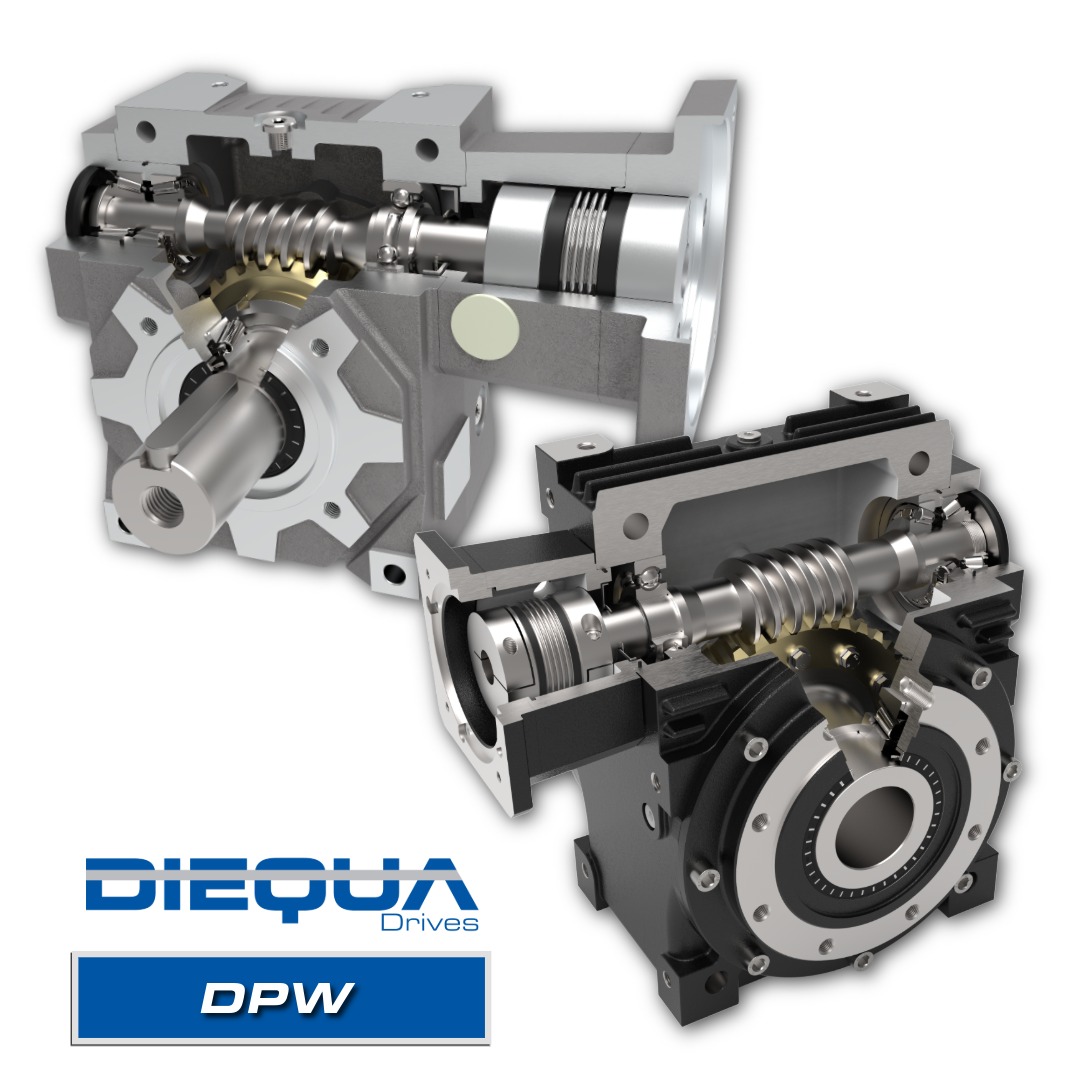
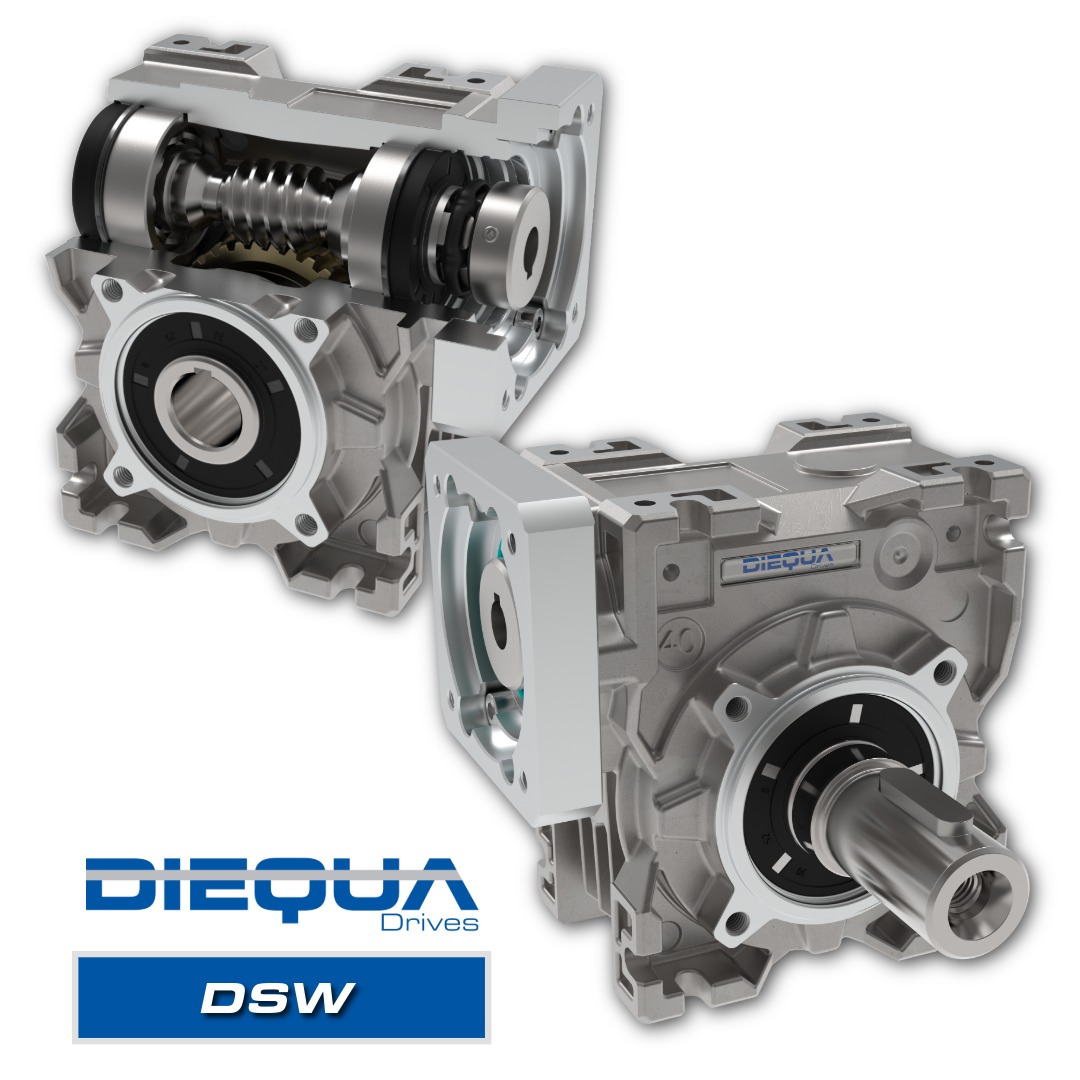
DieQua offers two series of right-angle servo worms: the DieQua Precision Worm (DPW) for high accuracy servo positioning and the DieQua Servo Worm (DSW) for standard industrial applications.
DieQua Servo Worm Gearbox Options at a Glance
| DPW Series | DSW Series | |
|---|---|---|
| Best for… | High-performance, ultra-precision | Economical, standard industrial |
| Backlash | 1.0 arcmin or less (Class P); 10 arcmin or less (Class B) | 30 arcmin or less |
| Backlash adjustment | Adjustable via dual-pitch worm | Fixed |
| Input coupling | Metal bellows | Elastomer |
| Max input speed | up to 6,000 RPM | Standard industrial speeds |
| Tooth contact | ~90% | Standard (~50%) |
| Output bearings | Oversized tapered roller | Ball or roller |
| Robot Flange (ISO 9409-1) | Available | Not available |
Which right-angle servo worm is right for your application?
Backlash and Precision
The DSW delivers standard industrial backlash of 30.0 arcminutes.
The DPW is built for high-precision positioning and comes in two backlash classes:
- Class P: ≤ 1 arcminute
- Class B: ≤ 10 arcminutes
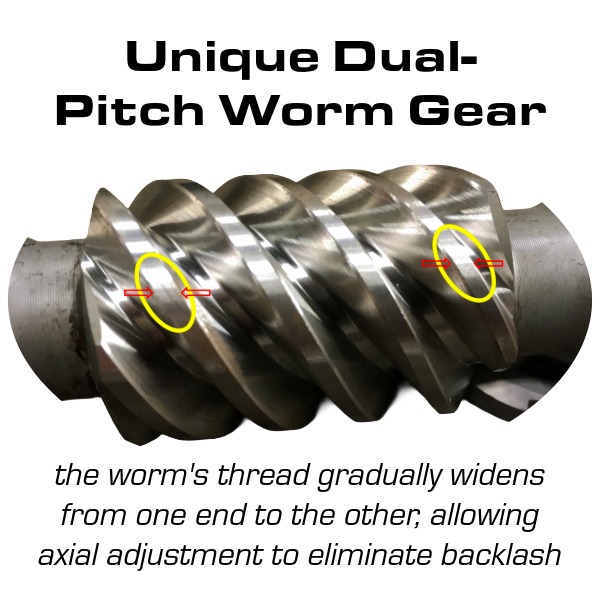
The DPW also features a dual-pitch worm design. As the gearset wears, backlash can be manually re-adjusted by axially shifting the worm relative to the worm gear.
That restores precision without replacing the gearset, extending the service life and lowering the total cost of ownership.
Input Coupling and Speed
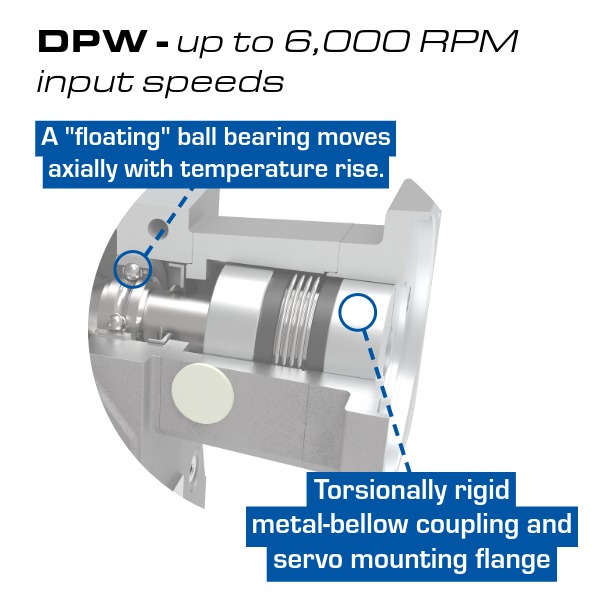
The DPW uses a torsionally rigid metal bellows coupling for maximum torsional stiffness and precise torque transmission.
A specialized input bearing assembly with a floating ball bearing absorbs axial thermal growth, supporting continuous input speeds up to 6,000 RPM without thermal binding.
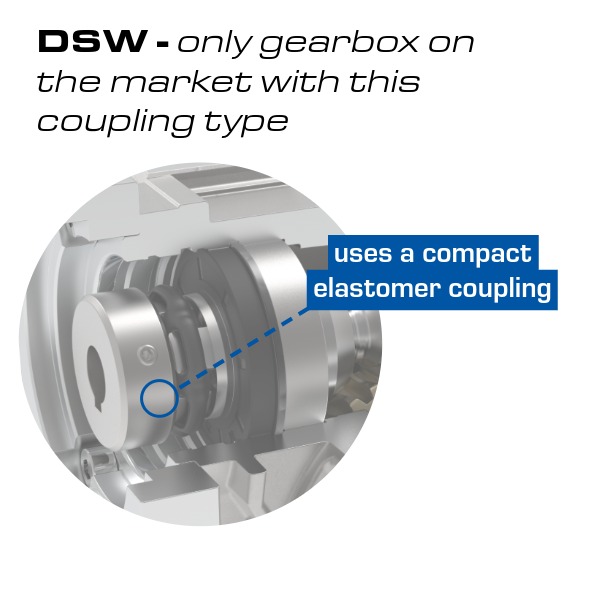
The DSW uses a compact elastomer coupling on the worm input shaft with a bolt-on motor flange.
The elastomer helps damp minor vibrations, and the flange system offers cost-efficient, universal mounting for virtually any servo, stepper, NEMA, or IEC motor.
Gearing and wear life
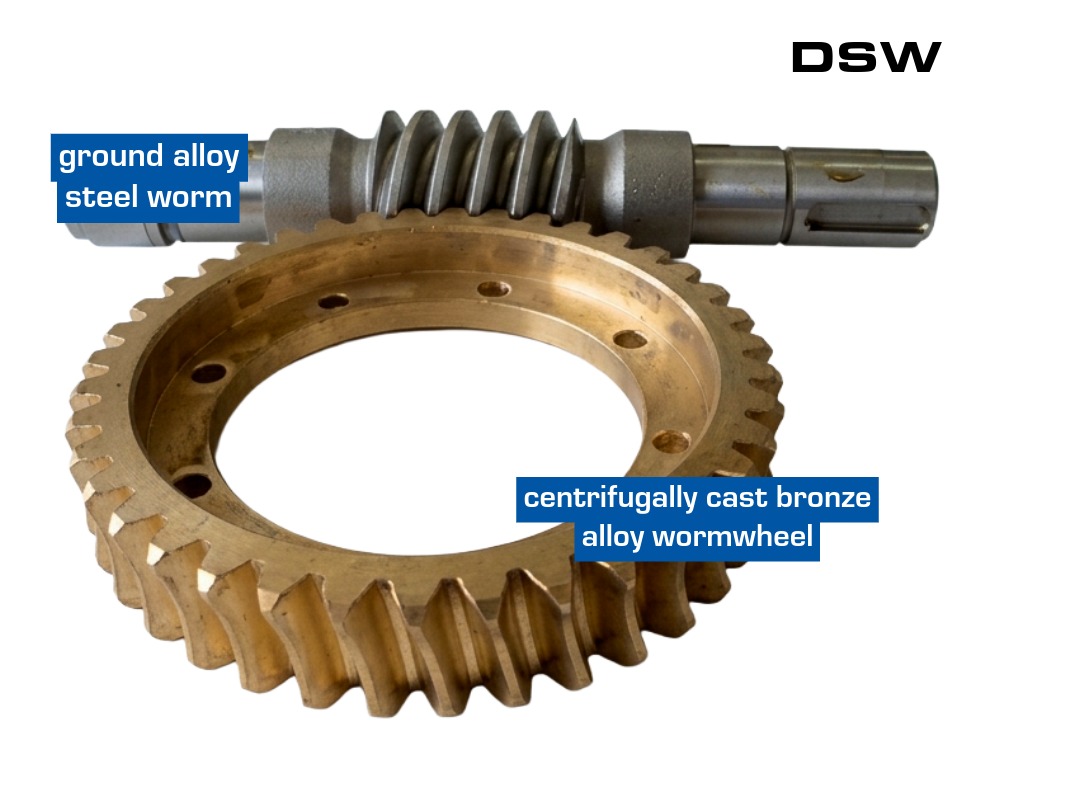
The DSW pairs ground alloy steel worms with centrifugally cast bronze alloy wormwheels bonded to cast iron hubs, a proven combination for standard duty cycles.
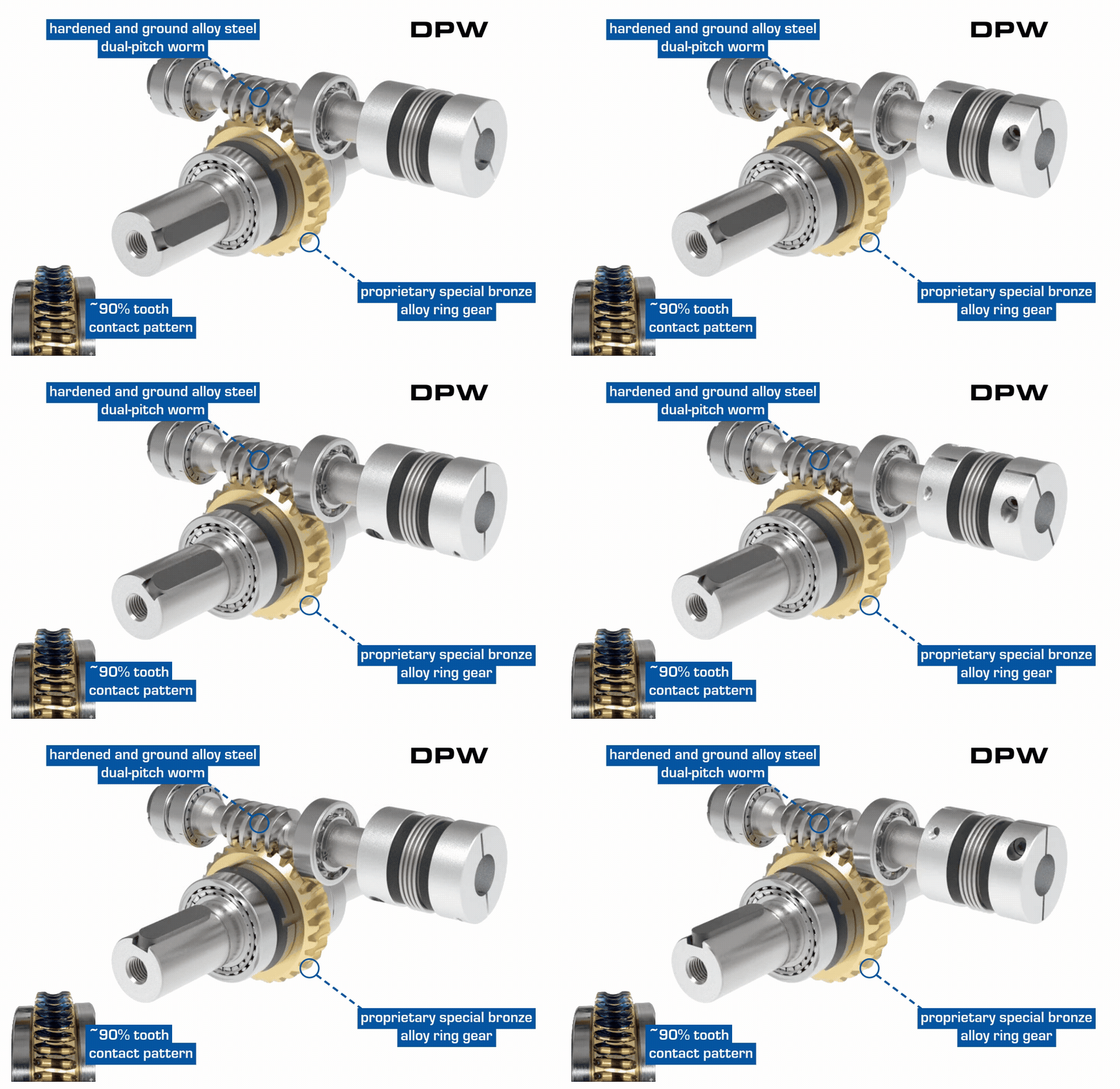
The DPW pairs hardened and ground alloy steel dual-pitch worms with a proprietary special bronze alloy ring gear.
Its tooth-cutting geometry achieves a tooth contact pattern of roughly 90%, compared with roughly 50% on standard worm drives. Greater contact area means lower surface pressure and friction, and longer wear life under heavy reversing loads.
Housing and bearing support
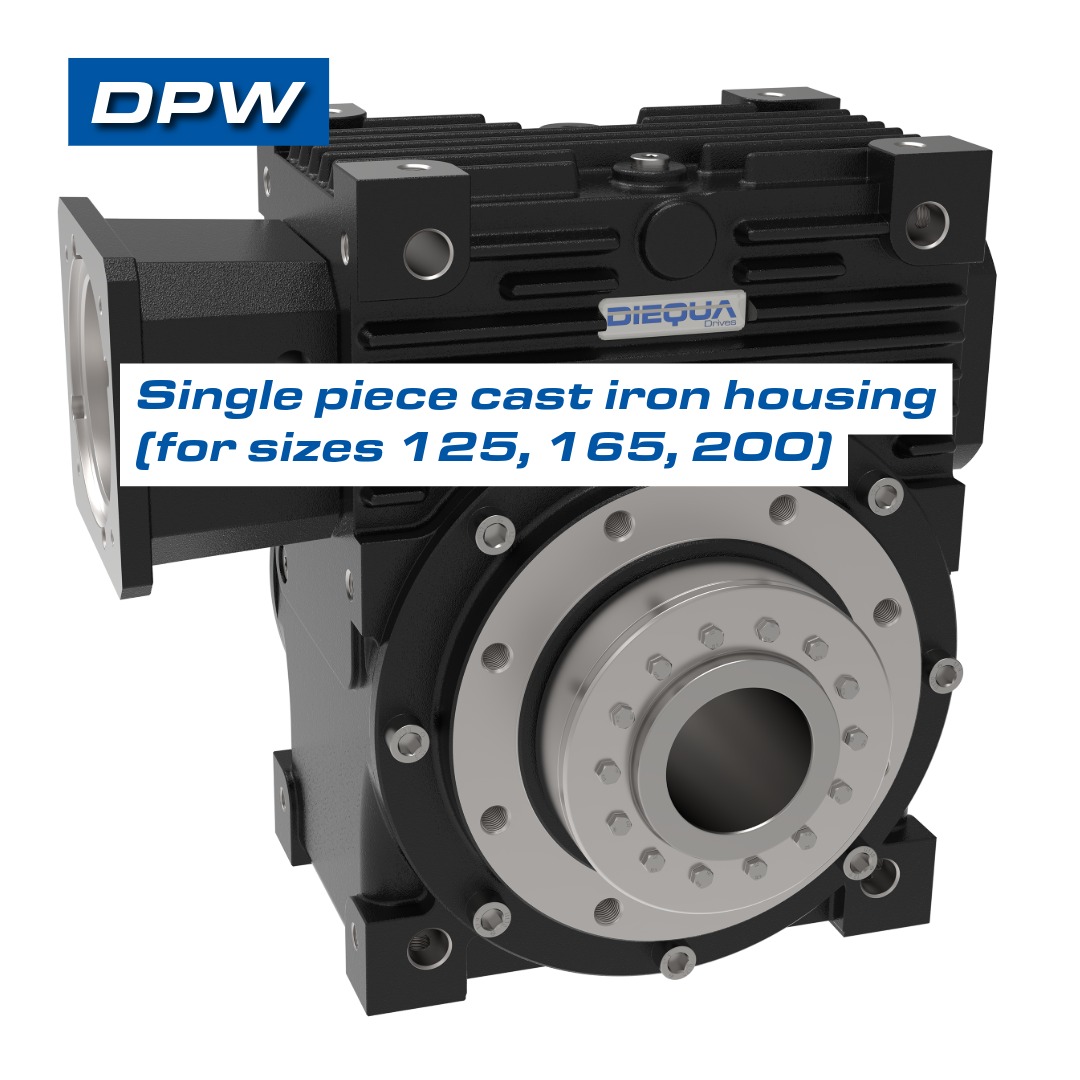
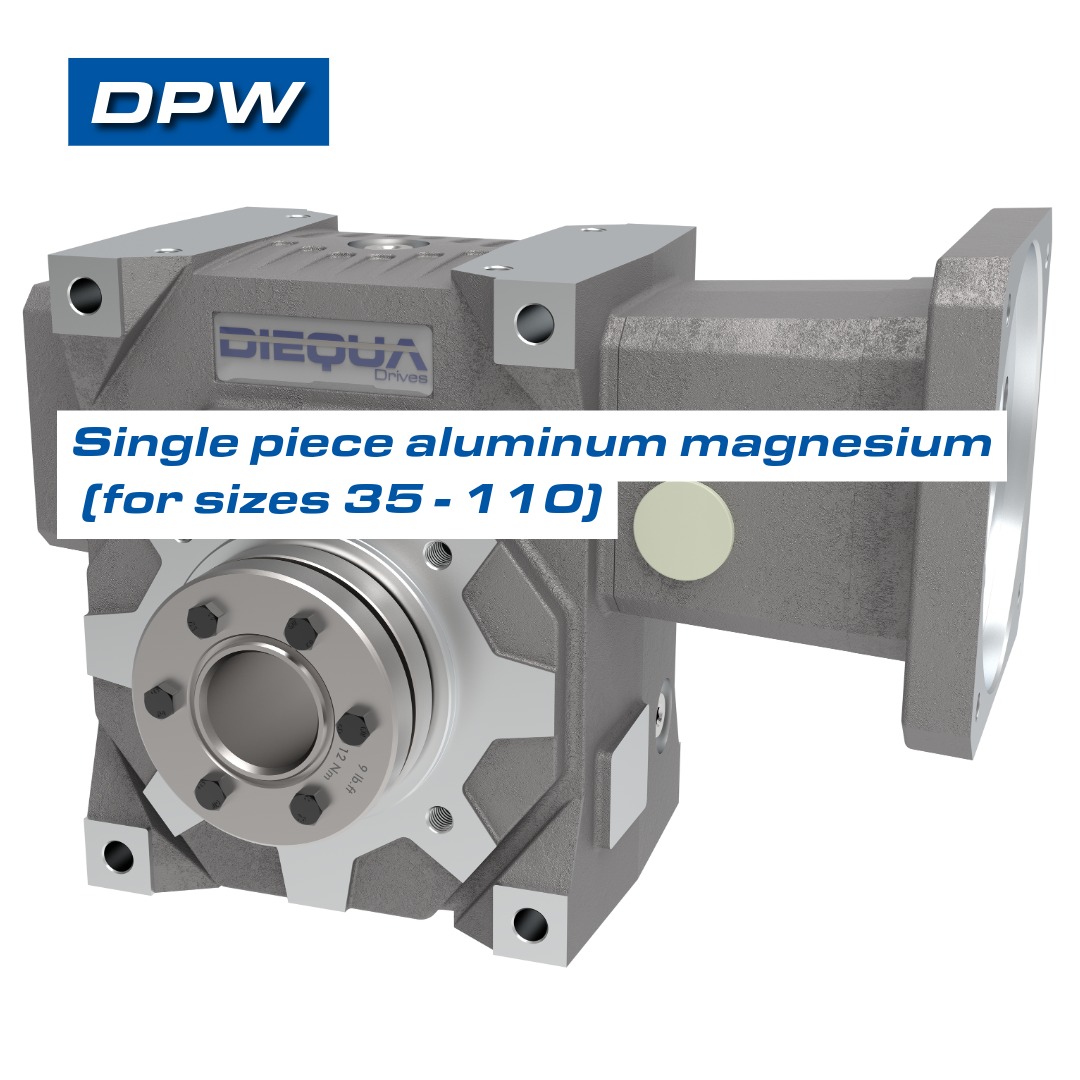
The DPW uses single-piece aluminum-magnesium die-cast housings in sizes 35 to 110 and heavy-duty single-piece cast iron housings in sizes 125 to 200 for high structural rigidity. Oversized tapered roller bearings on the output shaft handle substantially higher radial and axial overhung loads.
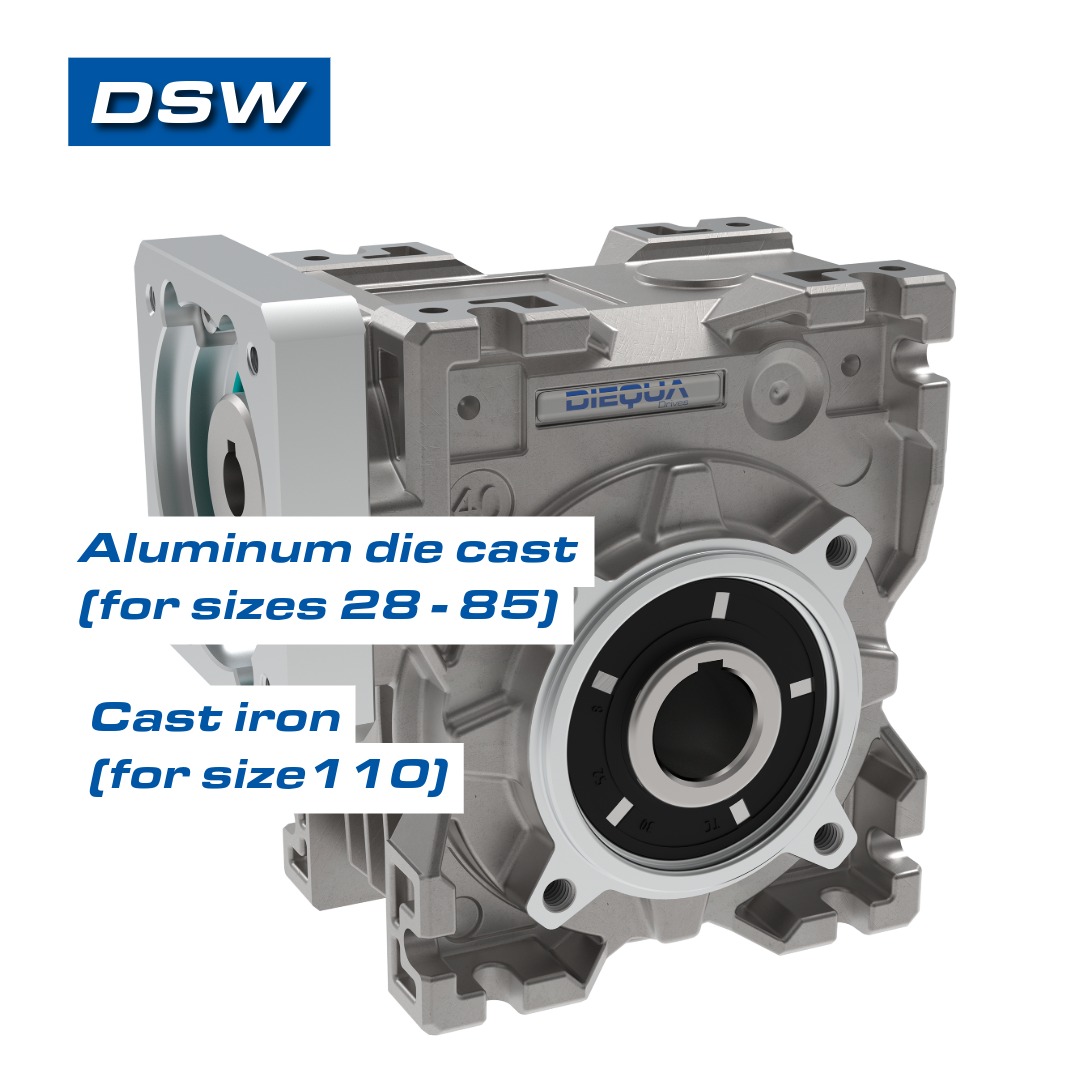
The DSW uses die-cast aluminum housings through size 85 and cast iron for size 110, with ball or tapered roller bearings on the output shaft.
Output configurations and the DPW robot flange
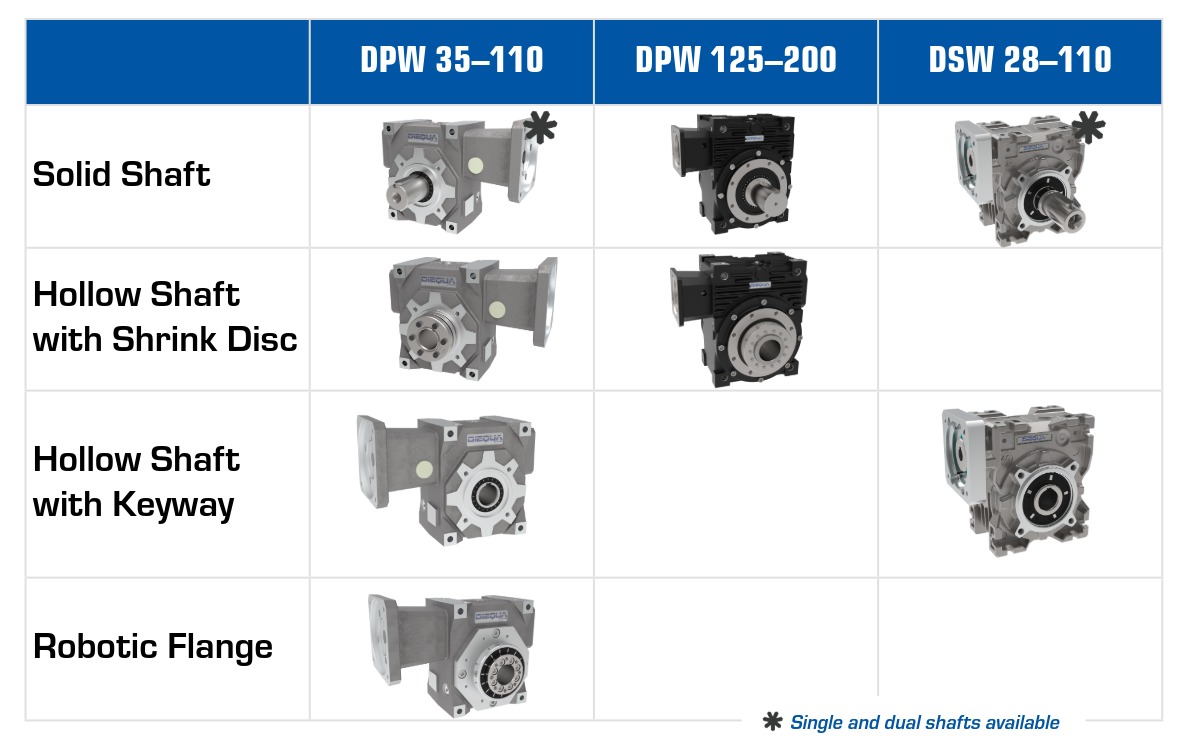
The DPW offers five output variants, each suited to a different mechanical interface:
• Single solid shaft
• Dual solid shaft
• Hollow shaft with shrink disc
• Keyed hollow shaft
• ISO 9409-1 robot flange for direct mounting of robotic end-effectors and rotary tables
The robot flange option sets the DPW apart. Built to the ISO 9409-1 standard, it lets robotic end-effectors and rotary tables mount directly to the gearbox output.
The DSW is built around a hollow bore output, with optional single or double insert solid output shafts.
Find your servo worm gearbox
Unsure which series suits your design? Send us your application details, including required output torque, overhung load, ratios, etc., and our engineers will help you size the right gearbox.